Skip to content
Athanasia Biska
Home
About
Bio
Awards & Distinctions
Special Events & Accomplishments
My Interviews
Community Involvement
In English
In Greek
Hosted Interviews
Davlos Magazine
In English
In Greek
Greek American Media
In English
In Greek
Greek magazines and newspapers
In English
In Greek
Greek Language & Culture
Interesting Articles
In English
In Greek
Modern Greek Language
In English
In Greek
Greek Education
In English
Ebooks_eng
In Greek
Culture
In English
In Greek
Greek American Community
History
Ebooks
Events and Activities
In English
In Greek
Greek Americans
In English
In Greek
Articles
In English
In Greek
Galleries
Moments
Trips
Highlights
Video
Contact
×
Home
About
Bio
Awards & Distinctions
Special Events & Accomplishments
My Interviews
Community Involvement
In English
In Greek
Hosted Interviews
Davlos Magazine
In English
In Greek
Greek American Media
In English
In Greek
Greek magazines and newspapers
In English
In Greek
Greek Language & Culture
Interesting Articles
In English
In Greek
Modern Greek Language
In English
In Greek
Greek Education
In English
Ebooks_eng
In Greek
Culture
In English
In Greek
Greek American Community
History
Ebooks
Events and Activities
In English
In Greek
Greek Americans
In English
In Greek
Articles
In English
In Greek
Galleries
Moments
Trips
Highlights
Video
Contact
Home
About
Bio
Awards & Distinctions
Special Events & Accomplishments
My Interviews
Community Involvement
In English
In Greek
Hosted Interviews
Davlos Magazine
In English
In Greek
Greek American Media
In English
In Greek
Greek magazines and newspapers
In English
In Greek
Greek Language & Culture
Interesting Articles
In English
In Greek
Modern Greek Language
In English
In Greek
Greek Education
In English
Ebooks_eng
In Greek
Culture
In English
In Greek
Greek American Community
History
Ebooks
Events and Activities
In English
In Greek
Greek Americans
In English
In Greek
Articles
In English
In Greek
Galleries
Moments
Trips
Highlights
Video
Contact
Donate
Donate
In English
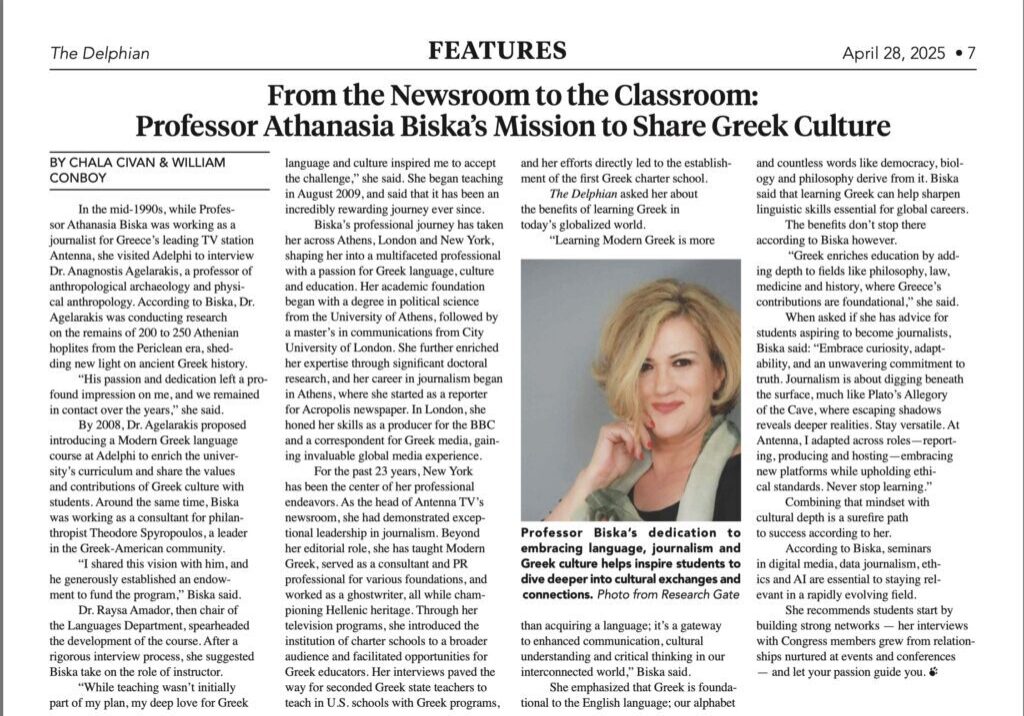
From the Newsroom to the Classroom: Professor Athanasia Biska’s Mission to Share Greek Culture
07/08/2025
The Delphian Student Newspaper FEATURES April 28, 2025 • 7 Professor Biska’s dedication to embracing...
Blog
/
Culture
/
Greek Education in USA
/
In English
/
In English
/
In English
« Previous
1
2
Latest Posts
FROM THE NEWSROOM TO THE CLASSROOM: PROFESSOR ATHANASIA BISKA’S MISSION TO SHARE GREEK CULTURE
07/09/2025
MARY LEFKOWITZ: ΟΙ ΕΛΛΗΝΕΣ ΔΙΕΧΩΡΙΣΑΝ ΤΗΝ ΕΠΙΣΤΗΜΗ ΑΠΟ ΤΗ ΘΕΟΚΡΑΤΙΑ»
07/09/2025
Greek Mythology and Medical and Psychiatric Terminology
07/09/2025
Is there life after birth?
07/09/2025
St. John’s College & Tobin School of Business, SPRING 2019 GREECE, March 2-10, 2019
07/09/2025
Scroll To Top